Jobscan vs Hatch
Jobscan highlights keyword alignment and match rates. Hatch applies deeper, role-specific resume reconstruction.


What Jobscan is built for
When resume optimization is primarily diagnostic, improvement depends on how effectively a user can interpret the signals and execute the changes themselves.
Jobscan is built around resume-to-job alignment through analysis.
Its core experience centers on comparing a resume against a job description and identifying optimization signals. Match rates, keyword gaps, and ATS-focused suggestions help users see where alignment may be weak.
The platform emphasizes visibility. It shows how closely a resume mirrors the keywords of a posting and provides guidance for improving that alignment.
For job seekers who are confident revising their own materials and willing to iterate manually across applications, this approach can feel transparent and controlled. For others, especially those with limited experience or lower motivation, insight alone may not translate into meaningful application improvement.
Who Hatch is built for
Hatch is built for job seekers who want progress quickly, not just visibility.
Hatch approaches alignment at a different layer.
Rather than centering the experience on scoring, it centers it on applied reconstruction. The system rewrites and restructures content directly around the target role, incorporating keywords within quantified achievements and cohesive narrative framing.
Instead of highlighting what is missing and stopping there, it applies structural changes automatically and asks clarifying questions when needed to strengthen specificity. The burden of interpretation does not sit entirely on the user.
The emphasis is less on alignment visibility and more on producing a role-specific, recruiter-ready document with reduced manual effort.
This approach is particularly effective for individuals who may not know how to translate feedback into stronger content, or who struggle with the repetition, motivation, and time required to manually optimize every application.
Resume Support: Scoring vs Contextual Reconstruction
Both Jobscan and Hatch compare resumes against job descriptions. Both identify alignment gaps and generate suggestions.
Jobscan centers this process around match rates and keyword scoring. It highlights missing terms, surfaces optimization signals, and provides AI-generated bullet suggestions. It also offers multiple resume templates, giving users formatting flexibility.
The emphasis is visibility. The system shows where alignment may be weak and relies on the user to translate that signal into stronger, role-specific content.
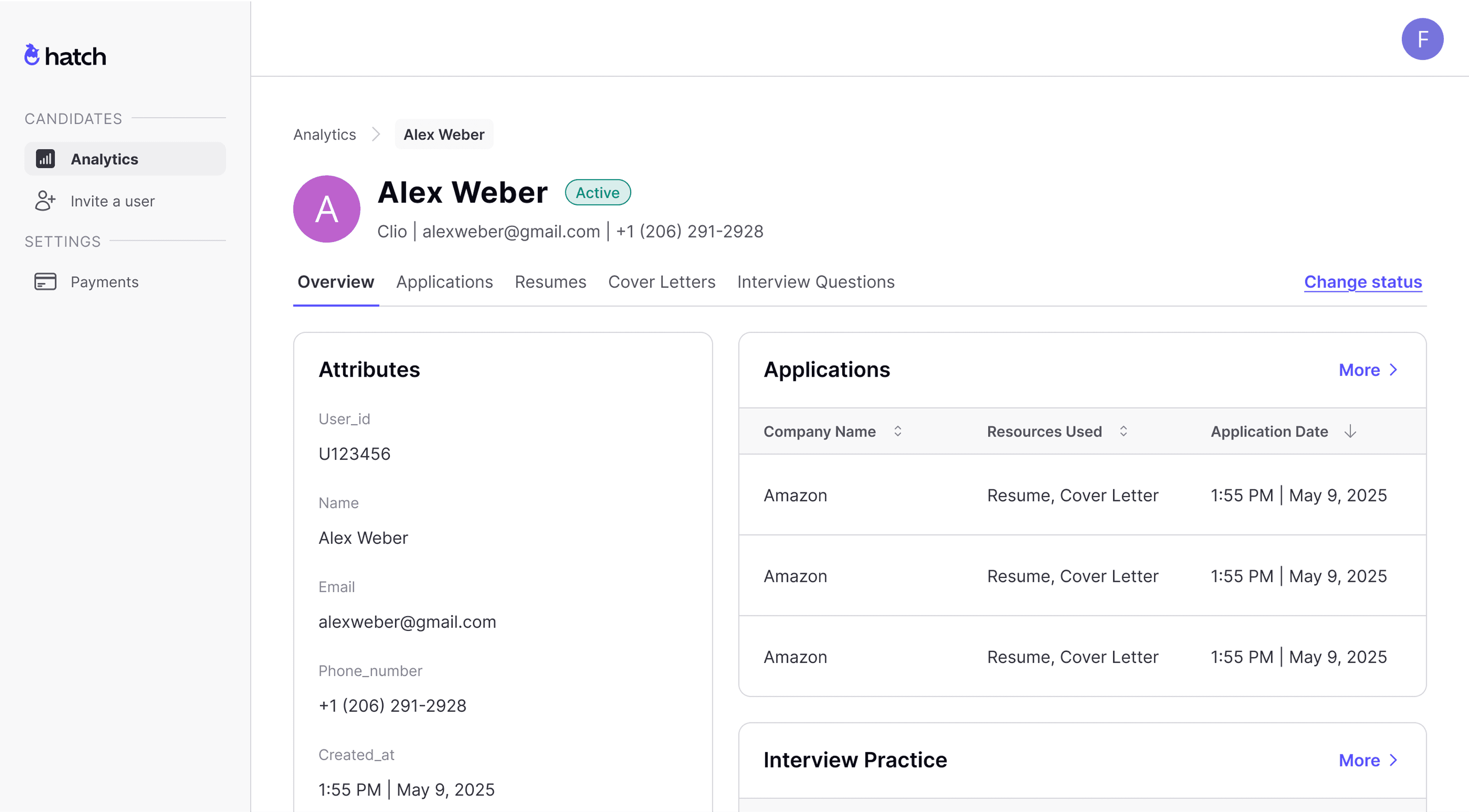
Hatch also optimizes for keyword alignment and ATS compatibility. The difference is how that optimization is applied. Rather than focusing primarily on increasing a match score, it reconstructs the resume around the target role. Keywords are incorporated within quantified achievements and narrative framing, not layered onto existing bullets.
Clarifying questions are used when needed to strengthen specificity before rewriting. The system applies structural revisions directly rather than stopping at diagnostic insight.
The difference is not whether both platforms align to job descriptions. It is how deeply alignment is embedded into the final document.
Jobscan optimizes for visible match indicators. Hatch optimizes for contextual relevance, measurable impact, ATS compatibility, and recruiter readability simultaneously.
Scope beyond the resume
Jobscan extends into job tracking, LinkedIn headline suggestions, and basic cover letter assistance. These features sit alongside its resume optimization tools, but they largely function as separate entities within the platform.
Hatch is structured as a connected workflow. Resume reconstruction informs cover letter drafting. Cover letter alignment reflects the same role-specific positioning. Interview refinement builds on the same experience framing established in the resume. Each step reinforces the others.
Rather than optimizing individual documents in isolation, the system maintains continuity across the entire application. Adjustments made in one area carry through to the next, reducing fragmentation and preserving a consistent narrative.
The difference is integration. One improves components. The other connects them.
For Organizations: Signals vs Applied Output
At the individual level, either system may help improve resume alignment.
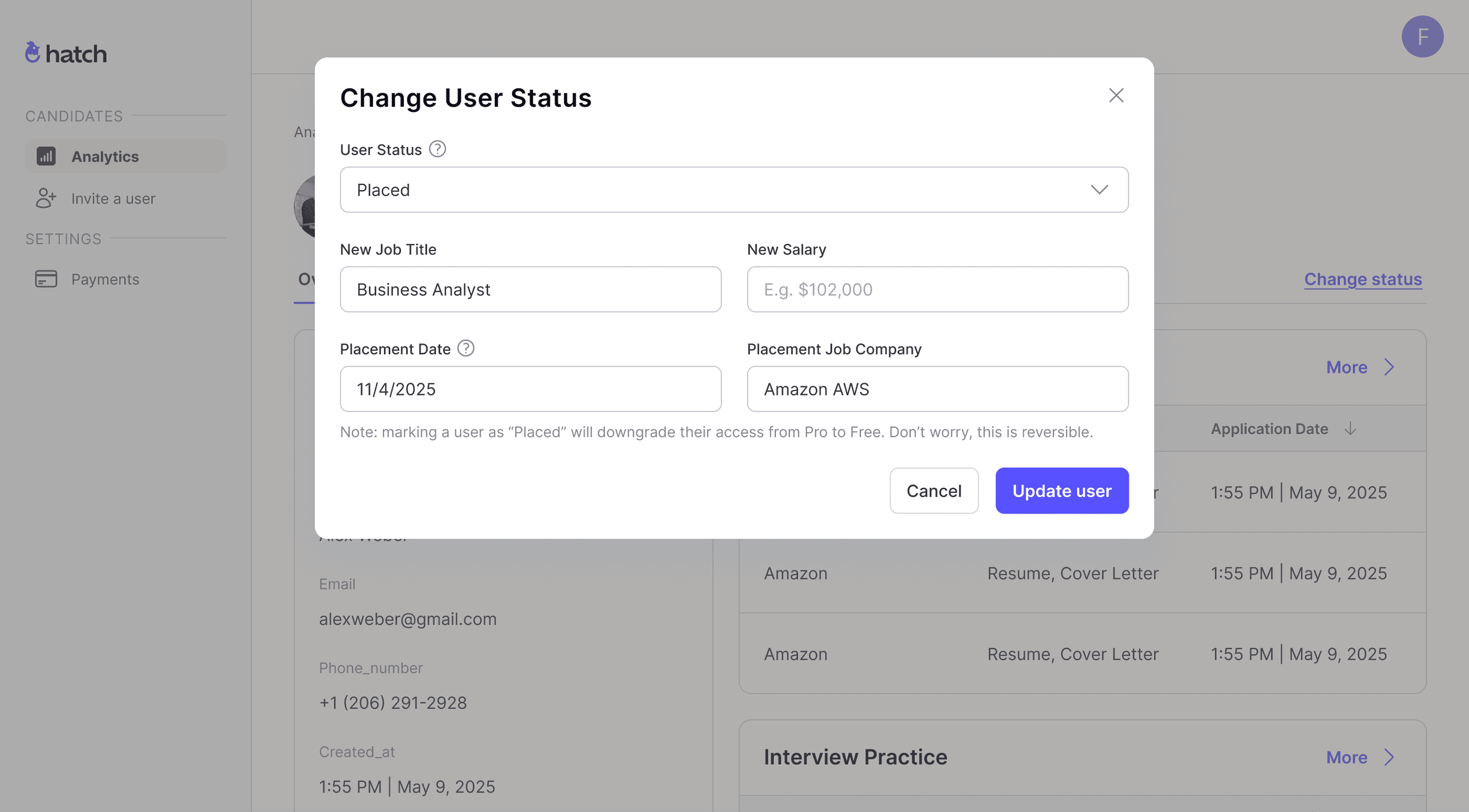
At the program level, the distinction becomes operational. Jobscan provides optimization signals and tracking. Hatch provides applied reconstruction and engagement visibility designed to demonstrate measurable progress.
In performance-based environments, the difference between surfacing issues and resolving them can influence adoption. Low adoption erodes advisor trust and reduces measurable ROI visibility.
Final Perspective
Jobscan focuses on keyword optimization and match scoring.
Hatch focuses on contextual reconstruction and end-to-end application strength.
They overlap in capability, but they operate at different levels of applied intelligence.
If improving alignment visibility is the goal, Jobscan may suffice.
If producing stronger, fully reconstructed application materials with reduced manual effort is the goal, Hatch may align more naturally.
The decision ultimately depends on how much of the editing process you want the system to handle.